
CEC, Illustrated — Part 1: Anatomy of a Class I, Zone 1 Lighting Installation
Explore a Class I, Zone 1 lighting and small-power diagram with plain-language CEC Section 18 notes for seals, supports, HL cable and flexible cords.

A wiring diagram you can interrogate
Every hazardous-location catalogue has a version of this drawing: a feed drops out of a safe area into a classified one, and two dozen fittings each do one very specific job on the way to the loads. The printed version has two problems — the key lives on another page, and the code references usually point at the NEC, which is not the code your inspector carries.
CEC, Illustrated redraws these classics as interactive diagrams with every reference rewritten, in plain language, for the Canadian Electrical Code (CSA C22.1:24). This series covers Section 18 (hazardous locations), the Section 20 occupancies — fuel dispensing, repair garages, bulk storage, finishing processes, aircraft hangars — and the legacy Division-system annexes.
Part 1 covers lighting and small power in a Class I, Zone 1 process area. An existing facility may retain a Division classification where Rule 18-000 permits it, but Class I, Division 1 and Zone 1 are not interchangeable area labels.
Numbered tags identify the equipment. Lettered tags are the CEC rules that put each piece where it is. Tap either kind, or browse the key under the drawing.
Interactive diagram
Lighting a Class I, Zone 1 process area
Tap any tag on the drawing — numbers are equipment, letters are CEC Section 18 rules (paraphrased).
Tap a tag on the drawing — or an entry in the key below — to see the equipment and the CEC rule behind it.
Key to equipment
CEC references
CEC references are plain-language paraphrases of CSA C22.1:24, Section 18 — not Code text. Confirm details against the published Code and your inspection authority.
Crossing the boundary (tag 1a)
The feed conduit's first obligation happens before it reaches a single load. When a conduit crosses into Zone 1 and terminates inside, Rule 18-104 5) wants an explosion seal inside the zone or within 1 m past the boundary, with the run uninterrupted between seal, boundary, and termination. That is the lone fitting straddling the hatched line at the top of the drawing.
The luminaire drops (tags 7h, 8h,k, 9l)
Three pendants hang off the overhead run, and each one stacks three rules:
- The hanger box (h) uses the threaded explosion-proof or flameproof box and fitting construction required by Rule 18-102(2). Support capacity and the approved luminaire mount must also be checked against the product instructions.
- The stem (k) is threaded rigid conduit with set screws. Past 300 mm of drop, Rule 18-108 2) demands lateral bracing — or a certified flexible fitting within 300 mm of the box, which is what the swivel supports in the drawing are doing.
- The luminaire (l) must be certified for the zone and guarded against impact, by hardware or by mounting height (Rule 18-108 1) and Table 18).
The same letter l follows every luminaire on the page — the linear fixture top-left, the floodlight and wall pack on the pole, even the portable handlamp.
The arcing stack (tags 12g, 13g, 15g, 2b,c)
Down the middle runs the gear that actually makes sparks: breaker, panelboard, starter. Anything that arcs in normal operation needs a Zone 1 protection type — typically flameproof — per Rule 18-100 and Table 18 (g). Where Rule 18-104 requires an entry seal, it must be as close as practicable and within the applicable limit: up to 450 mm for an explosion-proof enclosure, but 50 mm for a field-drilled entry or a flameproof “d” or “db” enclosure (b). The size exemption is narrower than people remember: skipping a seal at a non-arcing enclosure only works below trade size 53 — about 2 in (c).
Cable instead of conduit (tags 22m, 19d, 19o)
The thick runs are armoured HL cable — the CEC's recognized alternative to threaded rigid conduit in Zone 1 (Rule 18-102 1) b), tag m). The trade-off: certified glands at every termination, and a flammable-fluid migration seal where the cable first lands after entering the zone (o, Rule 18-104 7)). Gas travelling inside a cable is exactly the failure mode that rule exists for.
Cords, plugs, and the handlamp (tags 16i, 10l, 18f)
Fixed wiring cannot follow a portable lamp, so Rule 18-110 (f) permits extra-hard-usage flexible cord in the defined Zone 1 cases, with a bonding conductor and the required gland at an explosion-proof or flameproof entry. The receptacle feeding it (i) is interlocked so the plug can't break the circuit live. The same flexibility logic covers the wavy fittings at both motors.
The lettered notes in this diagram are plain-language paraphrases of CSA C22.1:24, Section 18 — not Code text. Area classification, equipment selection, and sealing details must be confirmed against the published Code and your inspection authority.
Next in the series
Part 2 takes the same treatment outdoors: a gasoline dispensing station under CEC Section 20, where the zones are drawn for you by rule and the dispenser sump is its own little world. If you spec or install in classified areas, the whole series is built to be the drawing you pull up mid-argument.
Frequently asked questions
Does the CEC still allow the Class I, Division 1 classification?
Yes. Rule 18-000 permits the Division system for specified additions, modifications, operation and maintenance work at existing Division-classified facilities. The CEC prefers Zones for new classifications, but Division 1 spans the Zone 0 and Zone 1 concepts; Zone 1 is not its universal equivalent.
How far can a conduit seal be from an explosion-proof enclosure under the CEC?
Rule 18-104 places the explosion seal as close as practicable to the enclosure and never more than 450 mm away for conduit systems — 50 mm for field-drilled entries and for flameproof "d" enclosures. Only explosion-proof unions, reducers, adapters, and elbows no larger than the conduit may sit between the seal and the enclosure.
Can I use cable instead of rigid conduit in Zone 1?
Yes — Rule 18-102 1) b) recognizes hazardous-location (HL-marked) armoured cable with certified glands as a wiring method in Zone 1, alongside threaded rigid metal conduit. A flammable-fluid migration seal is required where the cable first terminates after entering the zone.
When does a pendant luminaire stem need bracing?
Under Rule 18-108 2), a threaded rigid conduit stem longer than 300 mm needs permanent lateral bracing within 300 mm of its lower end, or a certified flexible fitting within 300 mm of the supporting box or fitting.
Related resources
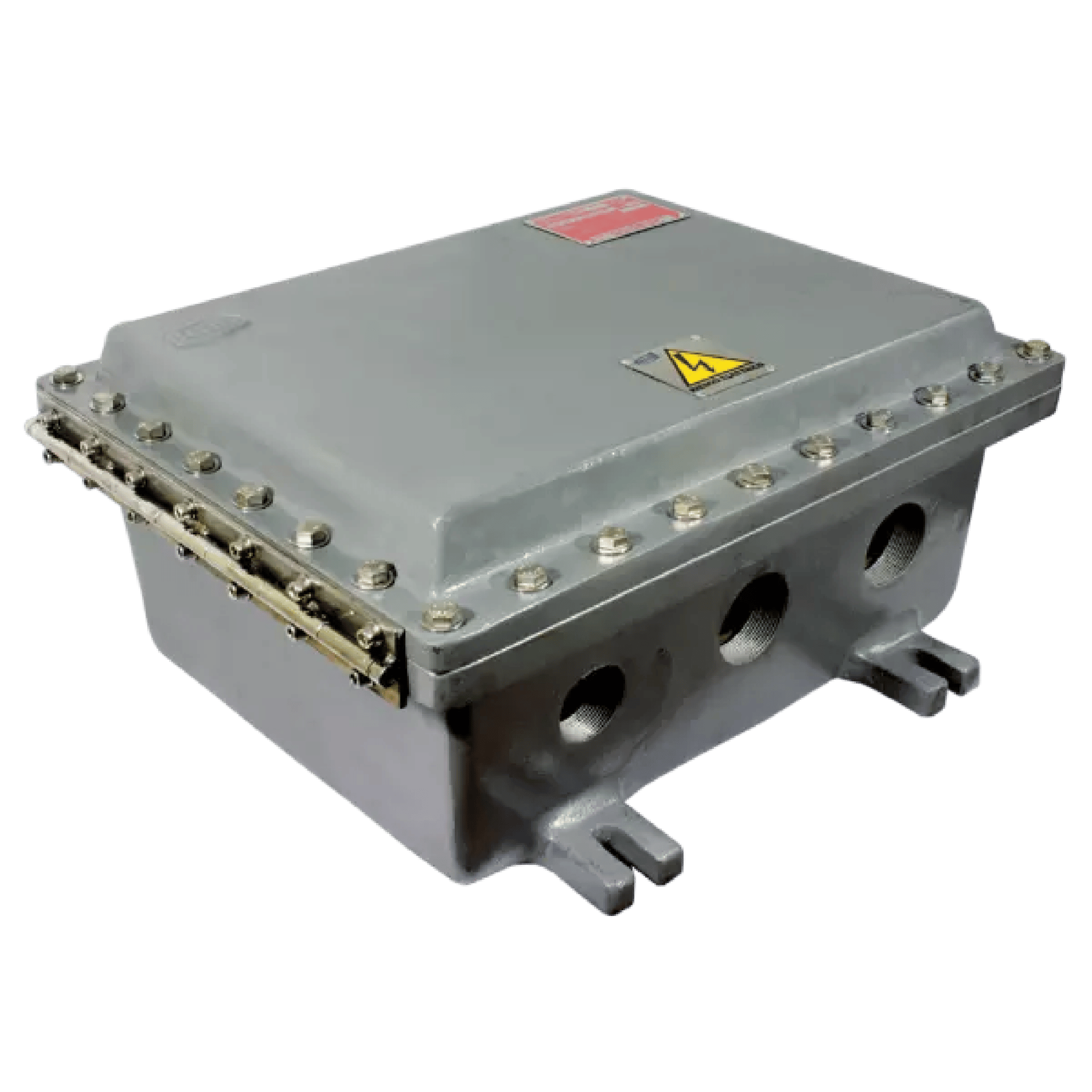
NEMA 7 vs NEMA 4X vs Explosion-Proof: What the Ratings Mean
NEMA 7 describes an enclosure built to contain a Class I explosion; NEMA 4X describes water and corrosion resistance. Neither is a hazardous-location approval. Here is how the ratings, the markings and CEC Section 18 fit together.

Oil & Gas LED Lighting: C1D1 Wellhead and Refinery
Build an upstream, midstream or downstream fixture schedule from the authenticated classification, model-specific records, site conditions and photometric targets.

Explosion Proof Nameplate T-Code and EPLs
An explosion proof nameplate T-code, EPL, and group marking tell you whether a luminaire fits the zone and atmosphere. Here is how to read the markings before you buy.