

NEMA 7 vs NEMA 4X vs Explosion-Proof: What the Ratings Mean
NEMA 7 describes an enclosure built to contain a Class I explosion; NEMA 4X describes water and corrosion resistance. Neither is a hazardous-location approval. Here is how the ratings, the markings and CEC Section 18 fit together.
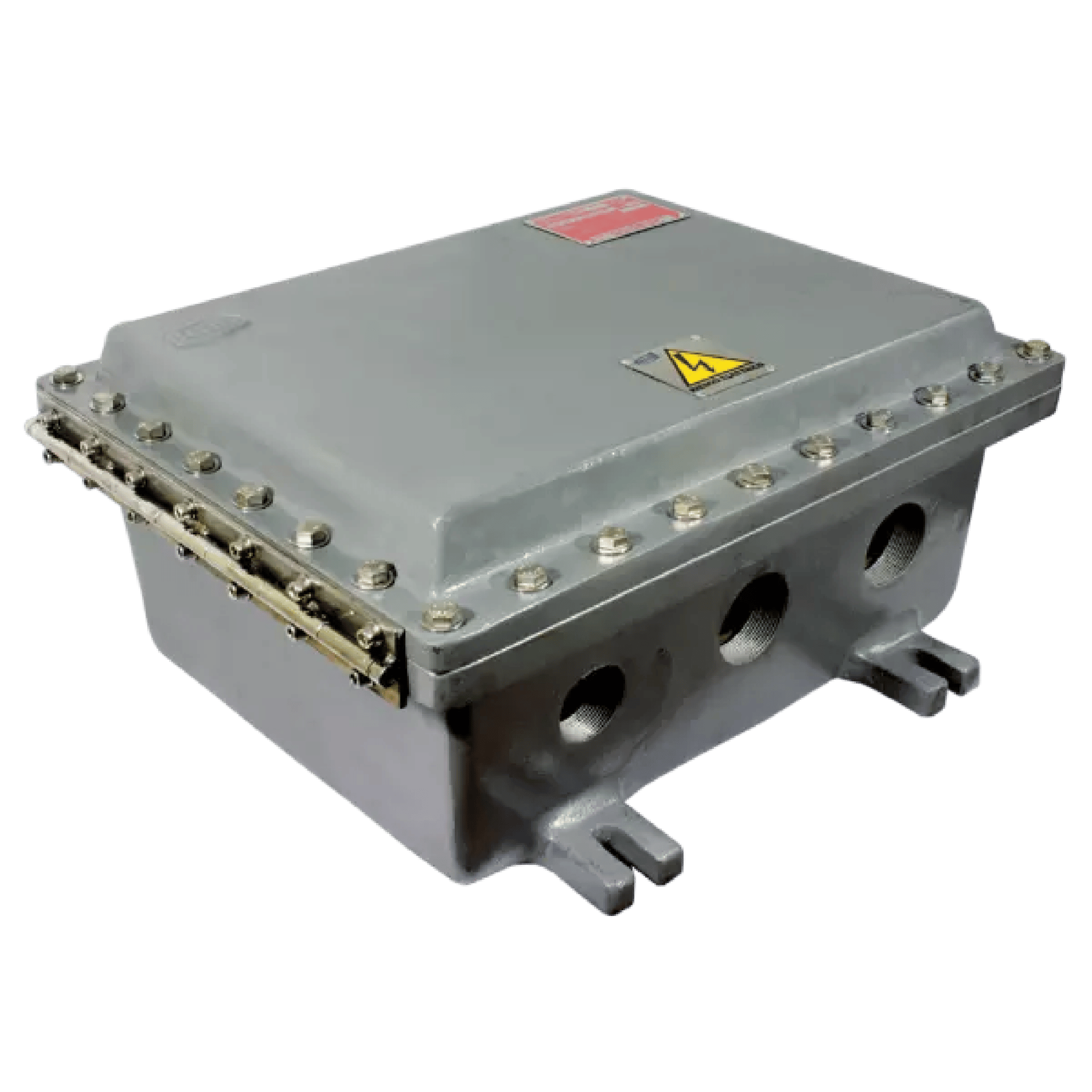
Three different questions, three different labels
“Is it NEMA 7?”, “Is it 4X?” and “Is it explosion-proof?” sound like the same question. They are three. A NEMA type describes what an enclosure keeps out or keeps in. “Explosion-proof” describes a method of protection. The hazardous-location approval, the Class, Division and Group marking issued by a Canadian certification body, is what CEC Section 18 actually asks for. A control station can carry all three, and a product can carry the first two without the third.
What NEMA 7 actually certifies
NEMA 250 Type 7 is an enclosure type for indoor Class I, Division 1 locations, Groups A, B, C or D as marked. The enclosure is designed to contain an internal explosion of the specified gas or vapour, cool the escaping gases below the ignition temperature of the surrounding atmosphere through machined flame paths or threaded joints, and keep its own external surface temperature within the marked limit. Because Division 1 equipment is also acceptable in Division 2, a Type 7 station or box is used in both.
Two things the label does not tell you. First, Type 7 is defined for indoor use; the definition says nothing about rain, hose-down or ice. Second, NEMA 250 is a construction and performance standard for enclosures, not a hazardous-location certification. The product still has to be tested and listed to the applicable standard, CSA C22.2 No. 30 or UL 1203 for explosion-proof equipment, and it is the resulting Class I, Division 1, Groups A–D marking, not the words “NEMA 7”, that an inspector reads.
NEMA 4X is about water and corrosion, not explosions
Type 4 enclosures are rated for indoor or outdoor use against windblown dust, rain, splashing and hose-directed water, and stay undamaged by external ice. Type 4X adds corrosion resistance, typically stainless steel, marine-grade aluminum or coated cast alloys. Nothing in the 4X definition concerns flammable gas, dust or the containment of an ignition. A 4X junction box in a Class I, Division 2 area is a weather-tight junction box in a hazardous location, and that is not enough.
The combination is what plants actually want outdoors: a product rated Type 7 and Type 4X at the same time, marked for Class I, Division 1 or 2, with a drain or breather fitting listed for hazardous locations so condensation does not defeat the explosion-proof joint. That is how the LEDEX push-button control stations are built.
The enclosure types you will meet in a plant
| NEMA 250 type | Protects against | Hazardous-location type? |
|---|---|---|
| 3R | Rain, sleet, external ice (outdoor) | No |
| 4 | Windblown dust, rain, hose-directed water, ice (indoor/outdoor) | No |
| 4X | Type 4 plus corrosion resistance | No |
| 7 | Contains an internal Class I explosion, Groups A–D (indoor) | Yes, Class I |
| 8 | Class I, oil-immersed (indoor/outdoor) | Yes, Class I |
| 9 | Excludes Class II dust, Groups E–G; limits surface temperature (indoor) | Yes, Class II |
| 12 | Dust, falling dirt, dripping non-corrosive liquid (indoor) | No |
| 13 | Dust, spraying water, oil and coolant (indoor) | No |
Read across, not down: a Type 7/9/4X station is one product that meets three definitions, and its hazardous-location marking will list both Class I and Class II groups.
“Explosion-proof” is the method; the marking is the approval
The CEC defines an explosion-proof enclosure as one that withstands an explosion of a specified gas or vapour inside it, prevents the ignition of the surrounding atmosphere by sparks, flashes or the explosion within, and operates at an external temperature that will not ignite that atmosphere. In the IEC vocabulary used for Zones the same idea is flameproof, Ex d. Both depend on details that a rating letter cannot capture: cover threads with full engagement, machined flange gaps within tolerance, no paint or sealant in the flame path, and bolts torqued as the instructions say. A NEMA 7 box with a cracked flange or a cover cross-threaded during maintenance is no longer explosion-proof, whatever the label says.
Section 18 therefore asks for approved equipment marked for the Class, Division or Zone, group and temperature code of the location, installed per the manufacturer's instructions, with the conduit system sealed within 450 mm of any enclosure that contains arcing devices. A push-button station contains arcing contacts, so the seal requirement applies to it every time.
Dust: NEMA 9 and Class II
Type 9 is the dust counterpart of Type 7: an indoor enclosure for Class II, Division 1 locations, Groups E, F and G, that excludes ignitable dust and limits surface temperature under a dust blanket. Grain, feed, sugar, flour, wood and pharmaceutical dust areas need the Class II marking; a Type 7 rating alone does not cover them. Most LEDEX enclosures and stations carry both Class I and Class II markings on the listed configurations, which is what a plant with both solvent and powder areas should standardise on. The Class 2 Division 1 lighting hub covers the luminaire side of the same question.
Canada: how NEMA types fit CEC Section 18
New Class I locations in Canada are classified by Zone, and Zone equipment carries Ex markings, not NEMA types. Division-marked equipment, which is what a Type 7 station normally carries, remains acceptable: Class I, Division 1 equipment in Zones 1 and 2, and Class I, Division 2 equipment in Zone 2, for the same gas group and temperature class, as described in Zones vs Divisions in Canada. The NEMA type helps you choose the enclosure for the environment; the marking and the certification record are what you write on the schedule and hand to the inspector.
Reading a control-station label
A typical station reads: Class I, Division 1 & 2, Groups B, C, D; Class II, Division 1 & 2, Groups E, F, G; Class III; Type 7, 9, 4X; T6; Ta −40 °C to +40 °C. In order: gas Groups B to D, so hydrogen (Group B) is covered but acetylene (Group A) is not; all three dust groups plus fibres and flyings; enclosure types for explosion containment, dust exclusion and outdoor corrosive service; a maximum surface temperature of 85 °C; and a valid ambient range. The operators fitted, start/stop, E-stop, selector or pilot light, and the contact ratings come from the catalogue number, and the certificate lists which combinations are covered. See T-codes and EPLs explained for the temperature line.
Specifying a NEMA 7 push-button station
- Take the classification from the authenticated drawing, not from the equipment being replaced.
- Match Class, Division or Zone, group and temperature code on the marking to the drawing.
- Add the environmental type the location needs: 4X for washdown, corrosion and outdoors; a drain/breather where condensation is expected.
- Specify the operators and contact blocks from the control schematic; for emergency stops, confirm the safety-circuit requirements with the machine builder under CSA Z432.
- Plan the conduit seals within 450 mm of the station and the unions needed to remove it for service.
- Request the certification record for the complete catalogue number and file it with the installation.
The LEDEX explosion-proof electrical hub groups the stations, junction boxes and enclosures and the fittings that complete the system. Send the schematic, the classification and the material requirement; we return a configured part number, its marking and its record.
Frequently asked questions
Is NEMA 7 the same as explosion-proof?
Not exactly. NEMA 7 is the NEMA 250 enclosure type built to explosion-proof principles for indoor Class I locations. Explosion-proof is the protection method, and the hazardous-location approval is the Class I, Division and Group marking issued after testing to CSA C22.2 No. 30 or UL 1203. Look for the marking and the certification record; the NEMA type on its own is not an approval.
Can a NEMA 7 enclosure be used outdoors?
Only if the same product also carries an outdoor environmental rating such as Type 4 or 4X (or 3R), because Type 7 is defined for indoor use. For outdoor stations specify Type 7 and 4X together and add a drain/breather fitting listed for hazardous locations so condensation does not accumulate inside the explosion-proof joint.
Is NEMA 4X explosion-proof?
No. Type 4X means watertight, dust-tight and corrosion-resistant. It says nothing about containing an ignition or about surface temperature. A product can be rated Type 7 and 4X at the same time, which is the usual specification for washdown and outdoor hazardous locations.
What is NEMA 9 and when do I need it?
Type 9 is the enclosure type for indoor Class II, Division 1 locations, Groups E, F and G: it excludes combustible dust and limits surface temperature under a dust layer. Grain, feed, flour, sugar, wood and pharmaceutical powder areas need the Class II marking; a Type 7 rating alone does not cover dust.
Do NEMA types apply to Zone-classified areas in Canada?
Zone equipment uses IEC Ex markings (for example Ex db for flameproof), not NEMA types. Division-marked equipment such as a Type 7 station remains acceptable in Zones 1 and 2 (Division 1 marking) or Zone 2 (Division 2 marking) for the same gas group and temperature class under CEC Section 18, provided the installation rules are followed.
Related resources
CEC, Illustrated — Part 1: Anatomy of a Class I, Zone 1 Lighting Installation
Explore a Class I, Zone 1 lighting and small-power diagram with plain-language CEC Section 18 notes for seals, supports, HL cable and flexible cords.

AC COB Technology: How ZENITH Handles High Temperature Lighting
ZENITH combines driver-on-board AC COB with a 90°C ambient rating and thermal protection that can reduce operating power to around 30 W. See how the light source, electronics and thermal design work together.
Explosion Proof Nameplate T-Code and EPLs
An explosion proof nameplate T-code, EPL, and group marking tell you whether a luminaire fits the zone and atmosphere. Here is how to read the markings before you buy.