

AC COB vs Remote Drivers: Understanding the 80°C Limit
Compare ZENITH’s AC COB design with remote drivers. See how factory-attached cable lengths and cool-zone placement complicate installation, and what an 80°C driver limit means.

AC COB and remote drivers in high-temperature lighting
For lighting near a kiln, dryer or hot production line, compare where the power electronics will operate. ZENITH uses driver-on-board / AC COB, with the drive circuitry on the board. A remote-driver design places a separate power supply away from the light head.
COB alone describes the LED package, so a COB luminaire can also use a remote driver. The useful comparison here is AC COB with onboard electronics versus a design with a separate remote driver.
Designers still need a suitable electrical drive arrangement for an LED array. Bridgelux identifies input voltage, output current, dimming, temperature and lifetime as driver-selection considerations in Application Note AN12.
That distinction gives you two questions for a supplier: what temperature can the light head withstand, and what conditions does its driver require?
Reading an 80°C driver limit
An 80°C figure can refer to a driver's case temperature, measured at a point the manufacturer defines. Ambient temperature describes the air around the equipment. Check the symbol and the operating conditions beside the number.
Two manufacturer examples show why 80°C is not a universal limit for LED drivers:
| Driver family | Maximum case temperature |
|---|---|
| MEAN WELL HLG-80H-C | 80°C |
| MEAN WELL HLG-240H-C | 90°C |
These values appear in the HLG-80H-C specification and the HLG-240H-C specification. They illustrate component ratings; they do not identify the driver in ZENITH or approve either driver for 90°C ambient service.
Also check the manufacturer's load-versus-temperature limits. MEAN WELL's LED power-supply guidance explains that allowable output can decrease as ambient temperature rises. The acceptable load depends on the model and its operating conditions.
A case-temperature example
Suppose a driver has an 80°C maximum case rating. In a hypothetical installation, the surrounding air reaches 65°C and the case runs 20°C above that air. The resulting case temperature is 85°C, which exceeds the stated limit.
The 20°C rise is an illustration, not a measurement of ZENITH or either driver above. You need the actual temperature at the specified case point under the intended load and mounting conditions. A number from the room thermostat cannot substitute for that measurement.
A maximum case limit also differs from a lifetime claim. For example, Tridonic publishes expected lifetime against temperature and load in its LCU DC-String driver data. Ask which temperature supports the quoted service life.
AC COB: onboard electronics without a separate driver box
ZENITH's AC COB arrangement keeps the drive function on the board. Installers can plan around the luminaire's mounting point and supply connection, without coordinating a separate driver in a cool zone or a factory-attached cable between the driver and light head. This simplifies the layout work in a retrofit where space and cable routes are limited.
The onboard electronics still face the fixture's thermal conditions. Assess ZENITH by its complete-luminaire 90°C ambient rating, selected configuration and installation instructions. Removing a separate driver unit does not remove the need for heat management, current regulation or electrical protection.
ZENITH's thermal power reduction
ZENITH's protection can reduce operating power to approximately 30 W during overheating. This lowers both heat generation and light output. Include that reduced-output state in the operational review of a hot process area, where the lighting target still matters during a thermal event.
Thermal foldback is a control feature, and separate-driver designs can also include it, as explained in Analog Devices’ LED driver design guidance. Compare each product's documented protection behaviour. The 30 W figure describes ZENITH's protective mode; it does not mean that ZENITH runs at 30 W throughout its normal temperature range or may operate beyond its 90°C ambient rating.
Remote drivers: factory cable lengths and cool-zone placement
To keep a remote driver out of process heat, the installer must find a cooler zone that meets the driver's specified ambient and case-temperature limits. That location can be some distance from the light head above the hot production area.
For systems with factory-attached wiring, specify the exact required cable length when ordering. Measure the full installed route from the light head to the driver, including vertical runs and routing around equipment. The straight-line distance between the two mounting points may be shorter than the cable route.
You therefore need to settle the driver location and cable route before the factory prepares the assembly. A later layout change can require a revised cable arrangement with the supplier. Finding a suitable cool zone and coordinating that factory cable makes installation more involved, especially in an existing plant with limited cable routes.
The longer connection also needs electrical design work. Confirm permitted lead length, conductor size and the driver's output-voltage range, together with the enclosure and installation requirements. Tridonic's DC MULTI driver wiring guidance illustrates that manufacturers specify wiring lengths and electromagnetic-compatibility conditions for particular products. Use the limits for the selected driver rather than a generic remote-mounting distance.
Moving a driver does not, by itself, increase the approved ambient rating of the light head. Select a documented luminaire and driver arrangement for the application.
Comparing a remote design with ZENITH
ZENITH uses COB technology and supports ambient temperatures up to 90°C (194°F) in non-classified industrial applications. Compare that complete-luminaire ambient rating with the rating of the proposed alternative. Keep component case temperatures in their own column.
For each proposed arrangement, ask for:
- the luminaire's maximum ambient temperature at the selected wattage;
- the driver location, ambient range and case-temperature limit;
- the permitted mounting and wiring arrangement, including any factory-attached cable and its exact order length;
- the light output and lifetime information at the intended operating temperature.
For the COB construction itself, read COB LED technology for high temperature lighting. To compare available LEDEX models, visit our high temperature lighting range.
Send the temperatures with the lighting enquiry
Provide the maximum air temperature at the luminaire and at any proposed remote-driver location, along with mounting height, supply voltage and operating hours. For a remote arrangement, include the proposed cool-zone location and the full cable route. If the system uses factory-attached wiring, provide the exact required cable length with the order.
Request a high-temperature lighting review so we can compare the fixture configuration with the conditions in your facility.
Frequently asked questions
Are all LED drivers limited to 80°C?
No. The limit depends on the driver and the temperature being specified. MEAN WELL lists 80°C maximum case temperature for HLG-80H-C and 90°C for HLG-240H-C. Neither case limit is a luminaire ambient-temperature rating.
Can COB lighting use a remote driver?
Yes. COB describes the LED package. A COB light source can use a separate remote driver. ZENITH uses driver-on-board / AC COB, which integrates the drive electronics on the board.
Does ZENITH run at 30 W at its rated ambient temperature?
The approximately 30 W figure describes thermal protection during overheating, not the normal wattage of every ZENITH configuration. Specify normal output using the selected model’s data and account for reduced light output if thermal protection activates.
Does moving a driver increase a luminaire’s ambient rating?
Not by itself. A cooler remote location can reduce the driver’s heat exposure, but the light head retains its own thermal limits. Use a documented combination with suitable mounting, wiring and temperature ratings. For systems with factory-attached wiring, choose the suitable cool-zone location and specify the exact required cable length before production.
Related resources

AC COB Technology: How ZENITH Handles High Temperature Lighting
ZENITH combines driver-on-board AC COB with a 90°C ambient rating and thermal protection that can reduce operating power to around 30 W. See how the light source, electronics and thermal design work together.
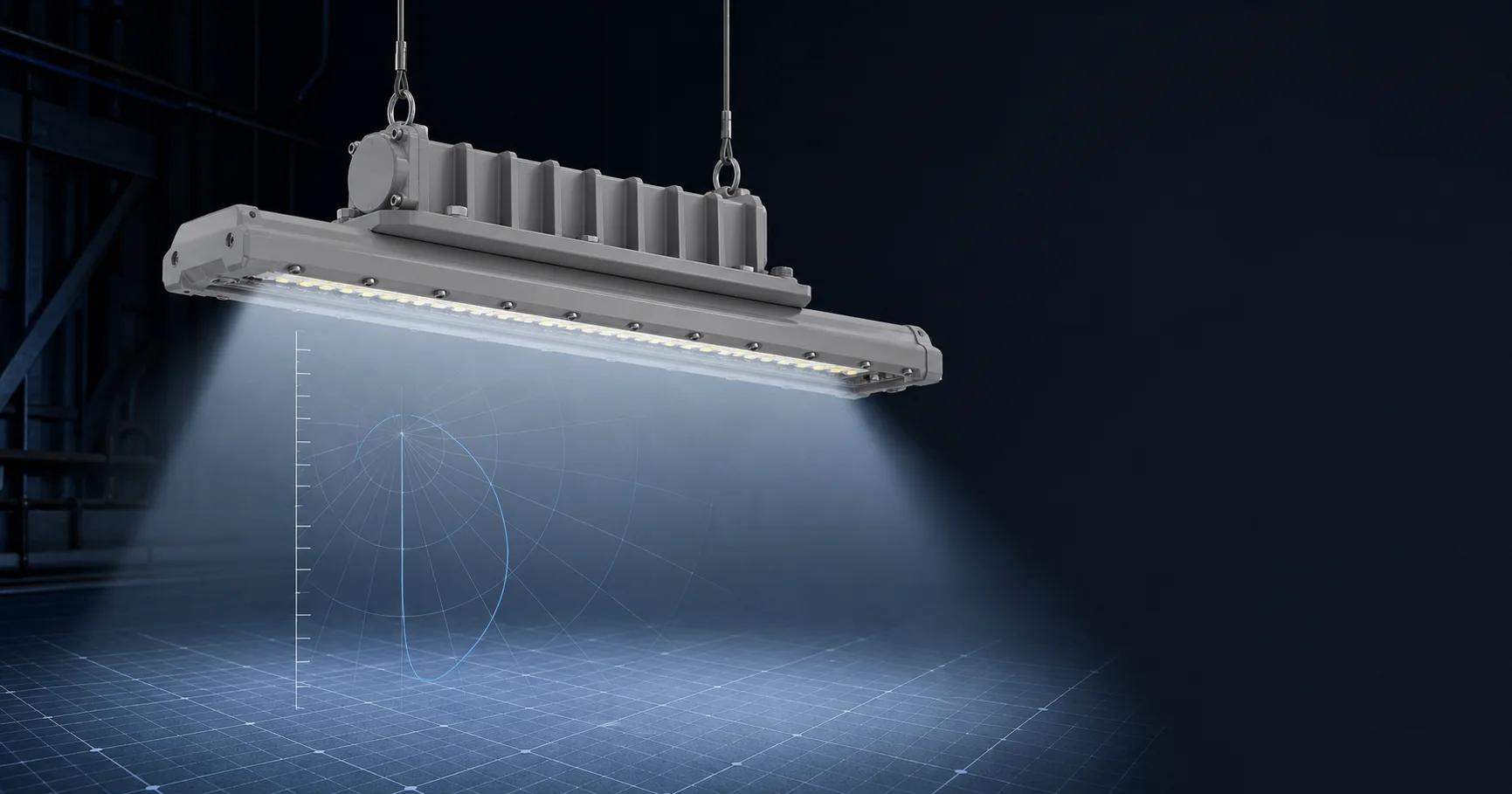
Photometric Design for Hazardous Locations: Choosing Lumen Output
Use mounting height and replacement benchmarks to screen an industrial LED lumen range, then prove the layout with the exact model’s IES file.
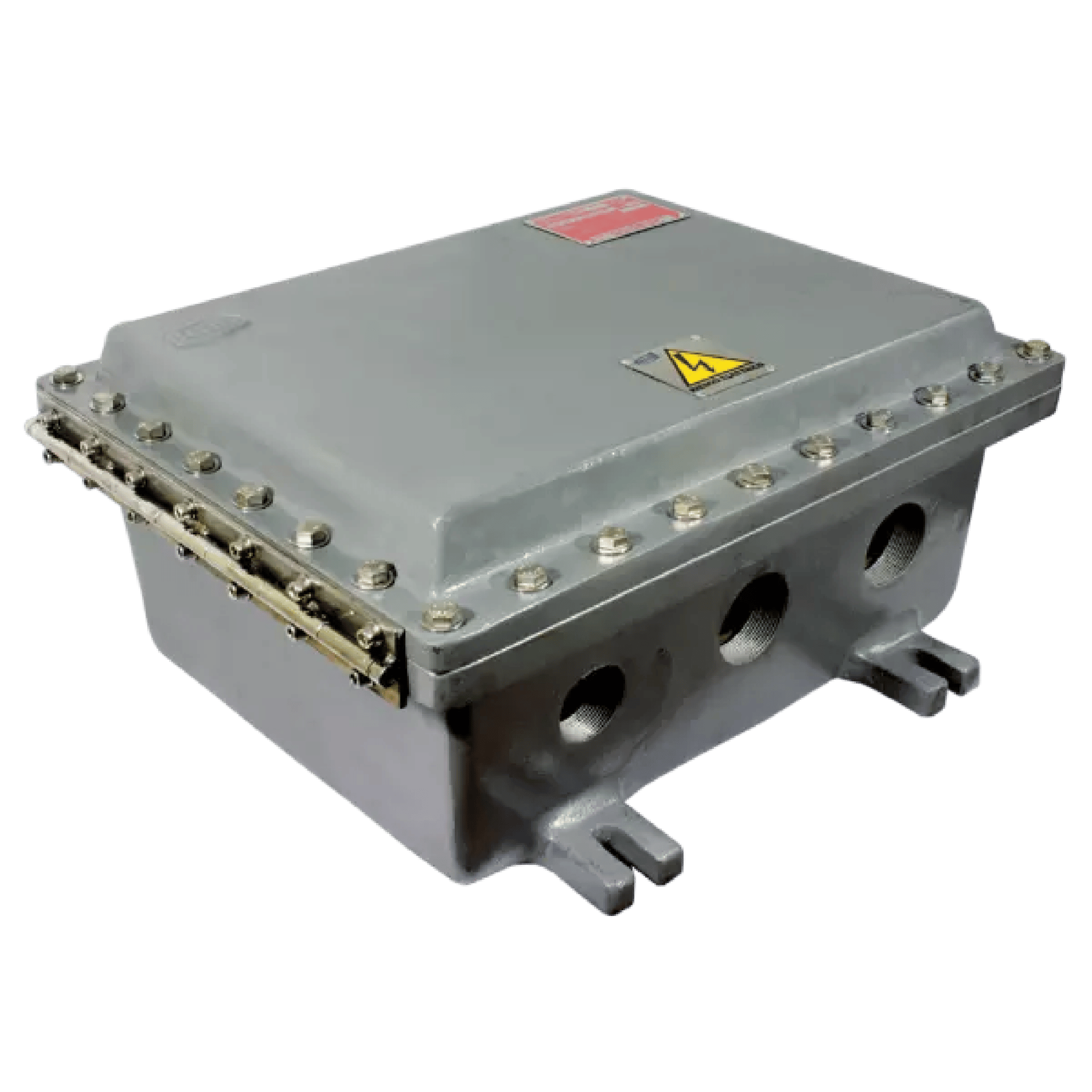
Explosion-Proof Junction Box Selection Guide for Canada
Compare outlet bodies, GUB instrument boxes and bolted enclosures, then verify the exact marking, usable space, entries and seal schedule before ordering.